Kyphosis Treatment Bangalore
Kyphosis Treatment in Bangalore — SpineDRx
Is your spine curving forward abnormally, giving you a hunched or rounded back? Do you struggle with back pain, difficulty standing upright, or a progressive stoop that impacts your confidence and daily life? You may be experiencing kyphosis — a treatable spinal deformity that, with timely expert care, can be significantly corrected or stabilised.
At SpineDRx, Bangalore, Dr. Ramachandran Govindasamy offers comprehensive kyphosis treatment in Bangalore, covering every cause and severity — from postural kyphosis managed with exercises and bracing, to complex rigid deformities requiring advanced corrective surgery such as Pedicle Subtraction Osteotomy (PSO) and Ponte osteotomy.
What Is Kyphosis? The Medical Explanation
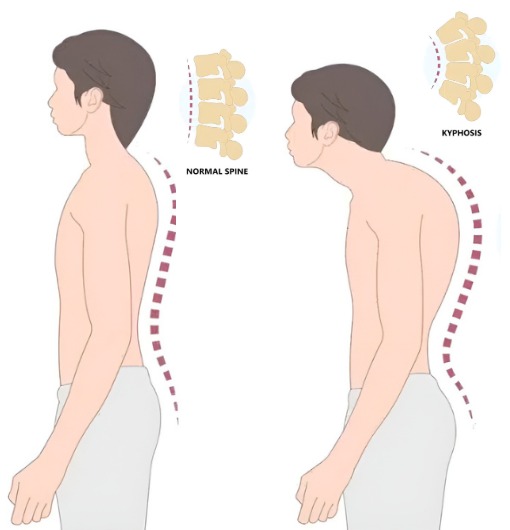
The spine has natural curves that help distribute body weight and absorb shock. A mild outward curve in the thoracic (chest) region is completely normal. Kyphosis is diagnosed when this forward curve becomes abnormally exaggerated — typically defined as a Cobb angle greater than 45 degrees on a standing X-ray.
Commonly referred to as a 'hunchback' or 'roundback', kyphosis can develop in children, teenagers, adults, and the elderly, with varying causes and treatment implications. Left untreated, progressive kyphosis can compress the spinal cord, restrict lung and heart function, and severely impair quality of life.
Types and Causes of Kyphosis — A Complete Overview
Understanding the cause of kyphosis is the first step to selecting the correct treatment. Dr. Ramachandran evaluates each patient thoroughly before recommending a management plan.
| Type | Cause | Who It Affects |
|---|---|---|
| Postural Kyphosis | Chronic slouching / poor sitting posture | Adolescents, young professionals, office workers |
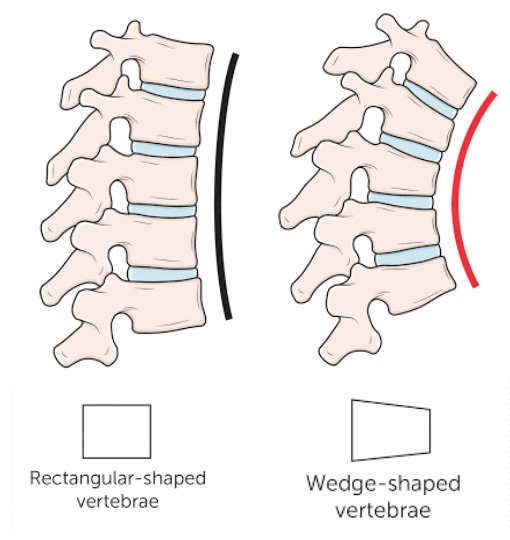
| Scheuermann's Kyphosis | Abnormal vertebral growth during adolescence causing wedge-shaped vertebrae | Boys aged 10–15 (most common structural kyphosis in adolescents) |
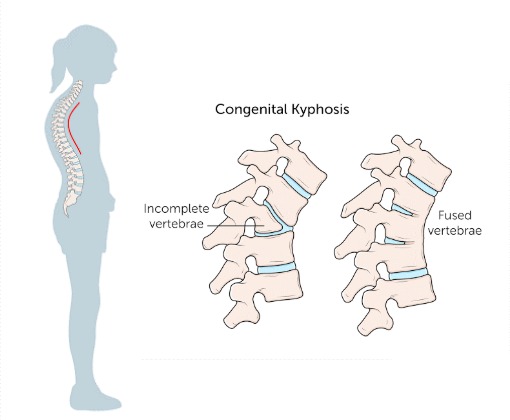
| Congenital Kyphosis | Abnormal bone formation or segmentation in the womb | Infants and children — present from birth |
| Senile Kyphosis | Age-related osteoporosis, vertebral compression fractures, disc degeneration | Elderly adults, especially women post-menopause |
| Ankylosing Spondylitis | Chronic inflammatory arthritis causing the spine to fuse in a bent position | Young men (20s–40s), HLA-B27 positive patients |
| Tuberculosis (TB) Spine | Mycobacterium tuberculosis infection destroying vertebral bones (Pott's disease) | Any age — common in India; produces angular kyphosis (gibbus deformity) |
| Post-Surgical / Iatrogenic | Previous spinal surgery causing flatback deformity or adjacent segment collapse | Adults who have had prior spinal instrumentation |
| Neuromuscular Kyphosis | Cerebral palsy, muscular dystrophy, spinal muscular atrophy affecting spinal support muscles | Children and young adults with neurological conditions |
Signs & Symptoms of Kyphosis — When to See a Specialist in Bangalore
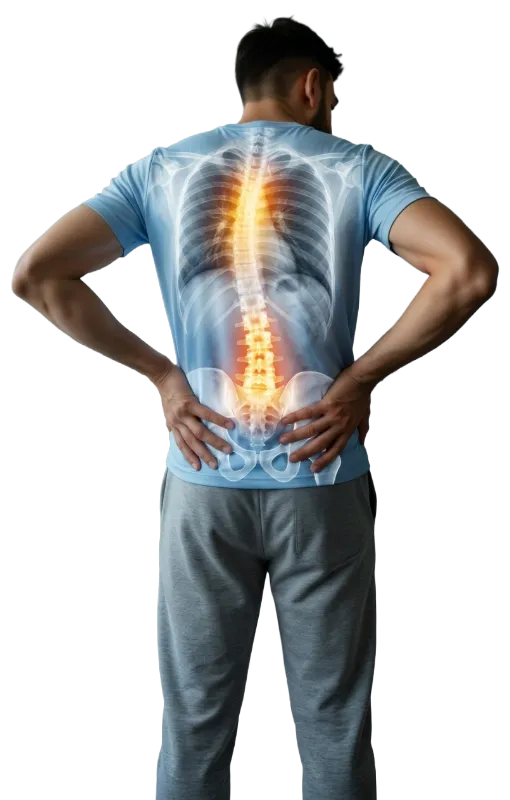
Kyphosis symptoms range from cosmetic concerns to disabling neurological complications. Seek specialist evaluation at SpineDRx if you notice:
- Visible hunching or rounding of the upper back
- Persistent mid or upper back pain — dull, aching, or sharp
- Fatigue when standing or sitting for long periods
- Difficulty standing fully upright — feeling 'pulled forward'
- Impaired forward vision — inability to look straight ahead without effort
- Shortness of breath or reduced exercise tolerance (when severe kyphosis compresses the lungs)
- Weakness, numbness, or tingling in the legs (myelopathy — spinal cord compression)
- Difficulty walking or balance problems in advanced cases
- Loss of height — particularly in elderly patients with osteoporotic vertebral collapse
Early evaluation prevents mild kyphosis from becoming a rigid, severe deformity that is far more difficult to correct.
Kyphosis Treatment in Bangalore — Our Comprehensive Approach
Treatment at SpineDRx is always cause-specific and individualised. There is no 'one-size-fits-all' approach to kyphosis — what works for a 14-year-old with Scheuermann's kyphosis is very different from what an elderly patient with osteoporotic collapse needs.
Postural Kyphosis — Correction Through Physiotherapy & Lifestyle
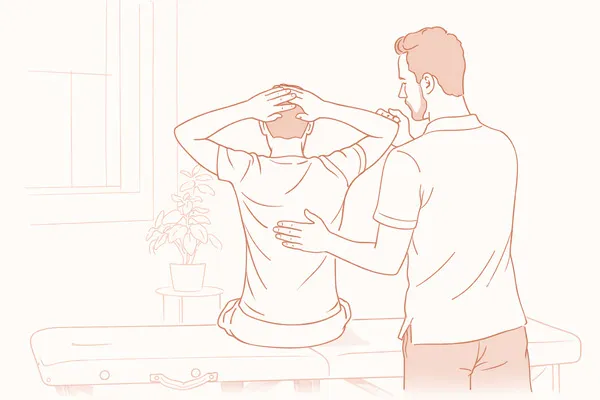
Postural kyphosis is the most correctable form. It is flexible (not rigid) and responds well to:
- Targeted physiotherapy — strengthening paraspinal, core, and scapular muscles
- Posture correction training and ergonomic workspace adjustments
- Stretching tight chest and hip flexor muscles
- Awareness exercises and postural biofeedback
Surgery is almost never required for postural kyphosis. Consistent physiotherapy over 3–6 months produces significant improvement.
Scheuermann's Kyphosis — Bracing & Surgical Correction
Scheuermann's kyphosis is a structural deformity where the vertebrae develop a wedge shape during growth. Management depends on the Cobb angle and skeletal maturity:
Bracing (Milwaukee or thoraco-lumbar brace):
Recommended for curves between 45–70 degrees in skeletally immature patients (Risser stage 0–2). The brace must be worn 16–23 hours/day to be effective and is discontinued once skeletal maturity is reached.
Surgical Correction:
Indicated for curves greater than 70–75 degrees, significant pain, cosmetic deformity affecting quality of life, or neurological compromise. Dr. Ramachandran performs posterior spinal fusion with pedicle screw instrumentation, using Ponte osteotomies at each level to mobilise the stiff segments and achieve significant correction.
Congenital Kyphosis — Early Surgical Intervention
Congenital kyphosis is caused by failure of vertebral formation or segmentation. Because the deformity worsens progressively with growth, early surgical intervention is often necessary to prevent spinal cord compression. Depending on the type and severity, Dr. Ramachandran performs:
- Posterior fusion in infants to prevent progression
- Anterior-posterior combined surgery for failed or unsegmented bar deformities
- Hemivertebra resection and short-segment fusion for focal angular deformities
Senile (Osteoporotic) Kyphosis — Medical & Surgical Management
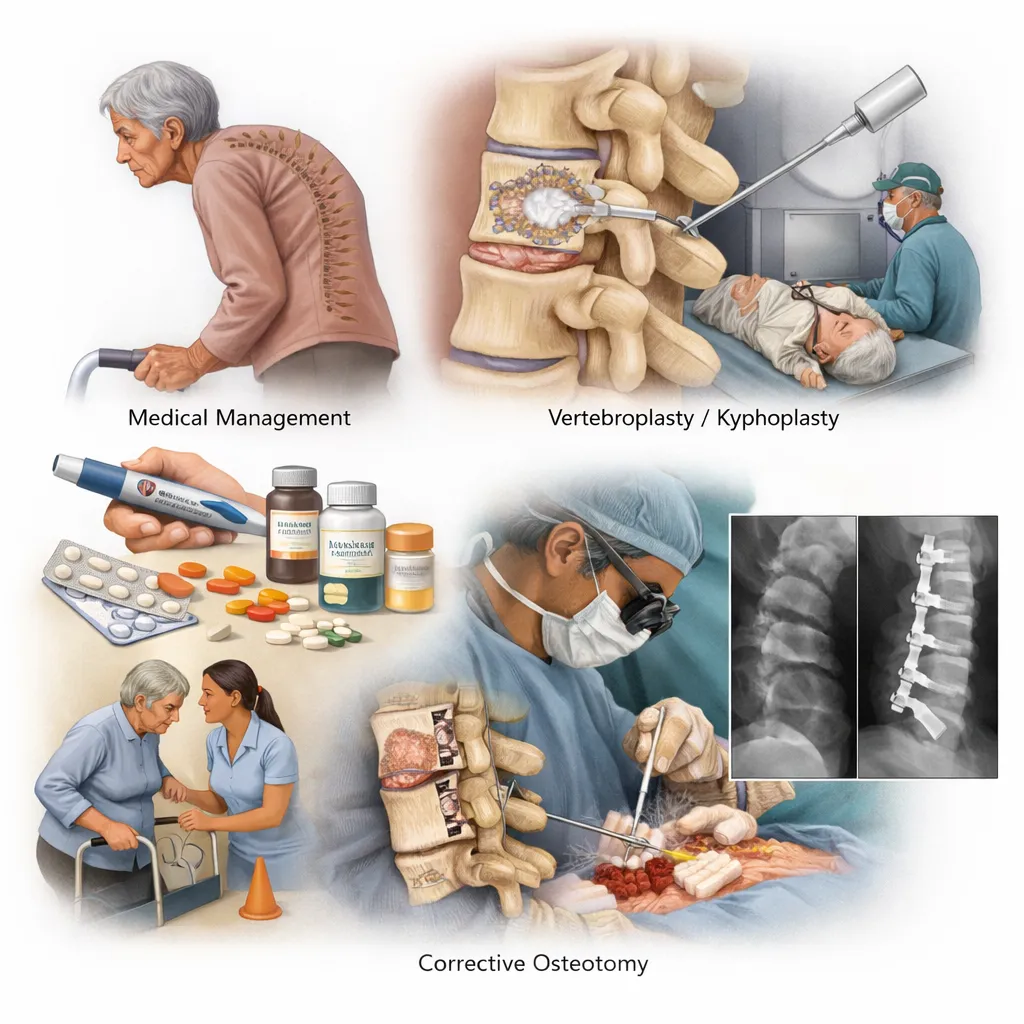
Senile kyphosis develops due to progressive vertebral compression fractures in osteoporotic bone. Treatment involves two parallel tracks:
Medical Management:
Treatment of underlying osteoporosis with teriparatide, denosumab, bisphosphonates, and calcium/Vitamin D supplementation. Fall prevention and physiotherapy are equally important.
Vertebroplasty / Kyphoplasty:
For acute, painful vertebral compression fractures with bone voids, cement augmentation procedures provide rapid pain relief and stabilise the fracture — often on a same-day basis.
Corrective Osteotomy:
In selected patients with severe, rigid kyphosis causing neurological compromise, surgical correction via pedicle subtraction osteotomy may be considered.
Ankylosing Spondylitis Kyphosis — Control & Correction
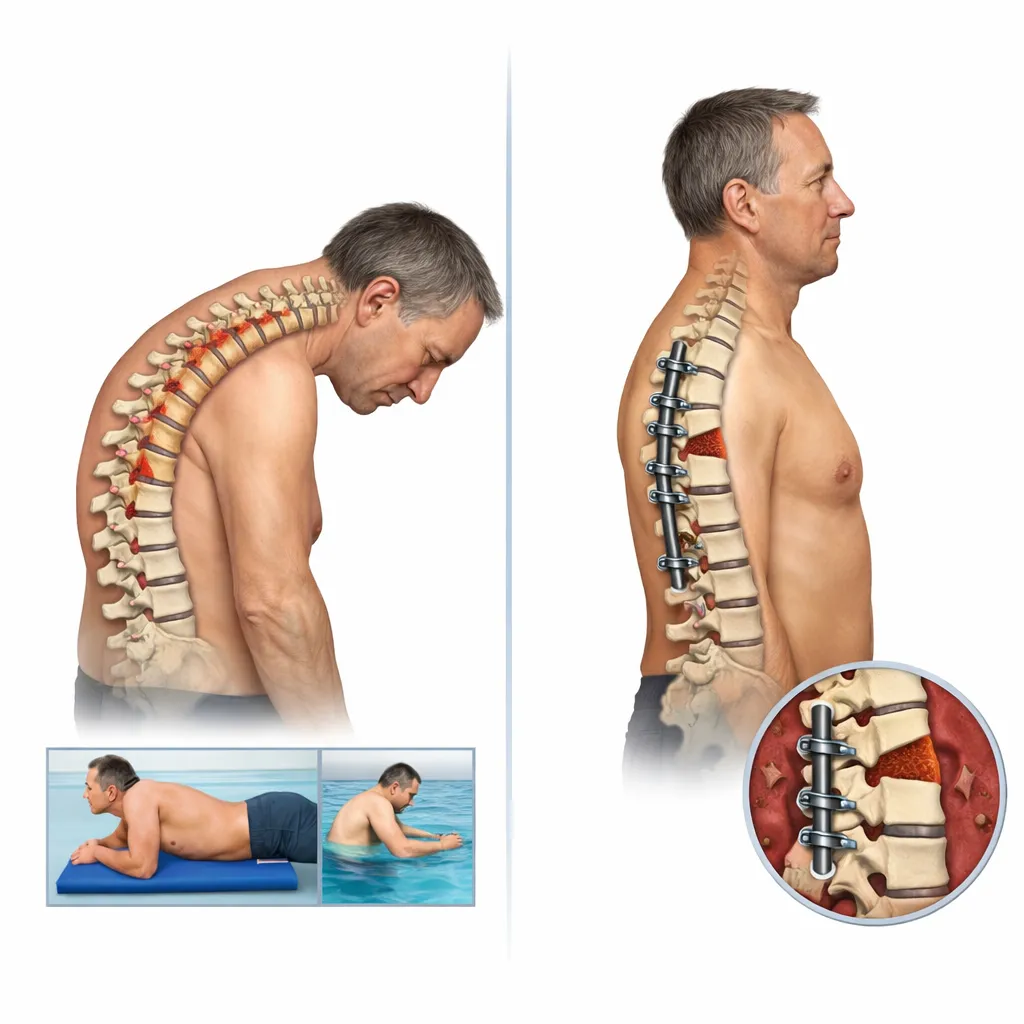
Ankylosing spondylitis (AS) causes the spine to fuse progressively in a forward-bent position, producing a rigid, chin-on-chest deformity in severe cases. Management has two phases:
Medical Phase:
Aggressive anti-inflammatory treatment with NSAIDs and biologic agents (TNF inhibitors) to control disease activity, preserve spinal mobility, and slow fusion. Daily hydrotherapy and extension exercises are critical.
Surgical Correction — Pedicle Subtraction Osteotomy (PSO):
For patients with severe, fixed kyphotic deformity causing inability to look forward, difficulty eating, or respiratory compromise, Dr. Ramachandran performs Pedicle Subtraction Osteotomy (PSO). This is a complex corrective procedure in which a wedge of bone is removed from a single vertebra, allowing the spine to be hinged backward and fixed in a corrected position with rods and screws. A single-level PSO can correct 30–40 degrees of kyphosis. The procedure dramatically restores horizontal gaze, standing posture, and quality of life.
Tuberculosis (TB) Spine Kyphosis — Medical Priority, Surgery When Necessary
TB spine (Pott's disease) is a bacterial infection of the vertebrae. It is primarily a medical disease:
Antitubercular Therapy (ATT):
The mainstay of treatment. A standardised 12–18 month regimen of anti-TB medications eradicates the infection and allows bone healing. Most patients do not require surgery.
Surgical Indications:
Dr. Ramachandran recommends kyphosis correction surgery in TB spine only when there is existing neurological deficit (weakness of legs), risk of impending neurological deterioration, or severe angular deformity (gibbus) that will not correct with medical treatment alone. Surgery involves debridement of infected tissue, cage reconstruction to restore vertebral height, and pedicle screw fixation to stabilise and correct the deformity.
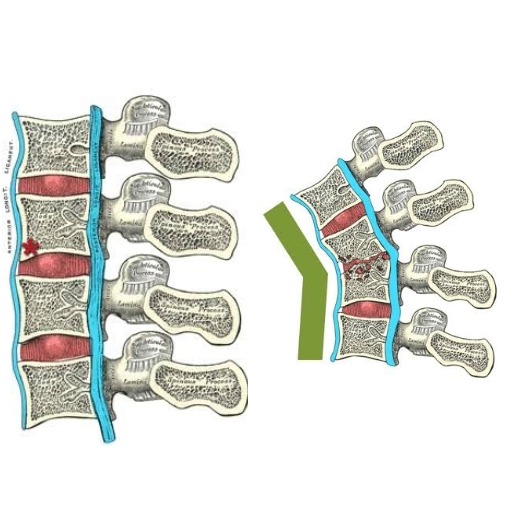
Pedicle Subtraction Osteotomy (PSO) — Bangalore's Advanced Kyphosis Correction
PSO is one of the most technically demanding procedures in all of spinal surgery, requiring a surgeon with specialised training, an experienced team, and a fully equipped spine operating theatre. Dr. Ramachandran Govindasamy is one of the few surgeons in Bangalore performing PSO with consistent, excellent outcomes.
| PSO — Key Facts | Details |
|---|---|
| What is removed | A closing-wedge of bone spanning the posterior elements and vertebral body at a single level |
| Correction achievable | 30–45 degrees per level |
| Indication | Rigid kyphosis from ankylosing spondylitis, failed previous surgery, severe senile kyphosis |
| Anaesthesia | General anaesthesia with neuromonitoring (SSEP & MEP) |
| Hospital stay | 5–7 days typically |
| Recovery | Gradual mobilisation from Day 1; full activity recovery in 3–6 months |
| Outcomes | Significant improvement in sagittal balance, horizontal gaze, pain, and respiratory function |
Why Choose SpineDRx for Kyphosis Treatment in Bangalore?
PSO is one of the most technically demanding procedures in all of spinal surgery, requiring a surgeon with specialised training, an experienced team, and a fully equipped spine operating theatre. Dr. Ramachandran Govindasamy is one of the few surgeons in Bangalore performing PSO with consistent, excellent outcomes.
| Our Advantage | What It Means for You |
|---|---|
| Complex Deformity Expertise | Dr. Ramachandran sub-specialises in spinal deformities — scoliosis, kyphosis, and combined deformities |
| Full Surgical Spectrum | From bracing guidance to PSO and vertebroplasty — every treatment option under one roof |
| Cause-Specific Management | Congenital, Scheuermann's, ankylosing spondylitis, TB, senile — each treated differently and correctly |
| Minimally Invasive Options | Vertebroplasty and kyphoplasty as day-care procedures for osteoporotic fractures |
| Intraoperative Neuromonitoring | SSEP & MEP monitoring during complex corrective surgery for maximum safety |
| Multidisciplinary Approach | Coordinating with rheumatologists, pulmonologists, and physiotherapists as needed |
| Multiple Locations | Kasavanahalli, Whitefield, and Aster Whitefield Hospital — accessible across Bangalore |
| Personalised Counselling | Clear explanation of diagnosis, prognosis, and all treatment options before any decision |
FAQs
A normal thoracic spine has a gentle outward curve of 20–40 degrees. Kyphosis is diagnosed when this curve exceeds 45 degrees, creating an abnormal forward hunch. Unlike scoliosis (side-to-side curve), kyphosis is a front-to-back deformity. It ranges from mild and flexible (postural) to severe and rigid (structural), and requires specialist evaluation to determine the appropriate treatment. Yes — in many cases. Postural kyphosis responds well to physiotherapy and posture correction exercises. Scheuermann's kyphosis in adolescents with curves under 70 degrees can be managed with spinal bracing. Senile kyphosis from osteoporosis responds to bone-strengthening medications and vertebroplasty/kyphoplasty for acute fractures. Surgery is reserved for curves that are severe, progressive, causing neurological symptoms, or failing non-surgical management. Dr. Ramachandran at SpineDRx always explores non-surgical options first. Scheuermann's kyphosis is the most common form of structural kyphosis in adolescents, affecting approximately 1–8% of the population worldwide. It occurs during the teenage growth spurt — most commonly in boys — when the front of the vertebral bodies grow more slowly than the back, causing them to become wedge-shaped and the spine to curve forward. In India, it is often under-diagnosed because it is mistaken for 'bad posture'. Early diagnosis and bracing during the growth phase can prevent the need for surgery. PSO is an advanced spinal corrective surgery in which a wedge of bone is removed from the posterior and middle columns of a vertebra. This allows the spine to be 'hinged' backward into a corrected position and fixed with rods and screws. A single PSO can correct 30–45 degrees of kyphosis. It is primarily used for rigid, fixed kyphosis in ankylosing spondylitis, severe senile kyphosis, or failed previous spinal surgery. It is a complex procedure performed under general anaesthesia with intraoperative spinal cord monitoring (neuromonitoring). All major spinal surgery carries risks, including infection, bleeding, nerve injury, hardware failure, and anaesthesia complications. However, in the hands of an experienced spinal deformity surgeon like Dr. Ramachandran, the risk of serious neurological complications from kyphosis correction surgery is low, particularly with intraoperative neuromonitoring. The benefits — restored posture, pain relief, improved lung function, and ability to look forward — are transformative for patients with severe deformity. Dr. Ramachandran discusses all risks and benefits in detail before any surgical decision. Kyphosis — particularly complex, structural, or surgical cases — requires a spine surgeon with specific training in spinal deformity correction. Dr. Ramachandran Govindasamy at SpineDRx, Bangalore, specialises in spinal deformities including kyphosis and scoliosis. He offers the full spectrum of kyphosis treatment — from physiotherapy and bracing guidance to complex osteotomy surgery — across clinics in Kasavanahalli, Whitefield, and Aster Whitefield Hospital. Recovery depends on the type and extent of surgery. After posterior fusion for Scheuermann's kyphosis, most patients can sit and walk within 1–2 days. Return to school or light activity typically takes 4–6 weeks, and full sporting activity is resumed in 6–12 months. After a PSO for ankylosing spondylitis, initial mobilisation begins on Day 1, with full recovery spanning 3–6 months. A structured physiotherapy programme is essential throughout recovery. The cost of kyphosis treatment in Bangalore varies significantly based on the type of treatment required. Non-surgical management (physiotherapy, bracing, medications) is relatively affordable. Vertebroplasty/kyphoplasty procedures involve day-care hospitalisation costs plus implant costs. Complex corrective surgery (PSO, posterior fusion) involves implants, ICU, and extended hospital stay — and may be partly or fully covered by health insurance. A detailed, transparent cost estimate is provided at SpineDRx during the initial consultation. Contact our clinic for personalised information. Yes — with early, aggressive treatment. Starting biologic therapy (TNF inhibitors or IL-17 inhibitors) early in the disease course significantly reduces spinal inflammation, slows the rate of vertebral fusion, and preserves spinal mobility. Daily extension exercises in the pool (hydrotherapy) are highly effective. However, once the spine has fused in a kyphotic position, medical treatment cannot reverse the deformity — only corrective surgery can. This is why early diagnosis and rheumatology referral are critical for ankylosing spondylitis.What is kyphosis and how is it different from normal spinal curvature?
Can kyphosis be corrected without surgery?
What is Scheuermann's kyphosis and is it common in India?
What is Pedicle Subtraction Osteotomy (PSO) and when is it needed?
Is kyphosis surgery risky? What are the outcomes?
Which doctor in Bangalore treats kyphosis?
How long does recovery take after kyphosis surgery?
How much does kyphosis treatment cost in Bangalore?
Can ankylosing spondylitis kyphosis be prevented from worsening?