Scoliosis Treatment Bangalore
Scoliosis Treatment in Bangalore
Has a school screening, GP examination, or worried parent noticed that your child's spine curves to one side? Or are you an adult experiencing worsening back pain, uneven hips, or a visible spinal curve on your X-ray? You may be dealing with scoliosis — and you are in the right place.
At SpineDRx, Bangalore, Dr. Ramachandran Govindasamy — a sub-specialist in spinal deformity correction with worldwide dedicated training in scoliosis — offers the most comprehensive scoliosis treatment in Bangalore. From careful observation and bracing in growing children to complex corrective spinal fusion surgery with intraoperative CT, robotic assistance, and neuromonitoring in severe cases, every patient receives a personalised, evidence-based plan.
Scoliosis is not a single condition — it is a family of spinal deformities with different causes, behaviours, and treatments at different ages. Understanding the type is key to getting the right treatment at the right time.
What Is Scoliosis? — Understanding the Sideways Spinal Curve
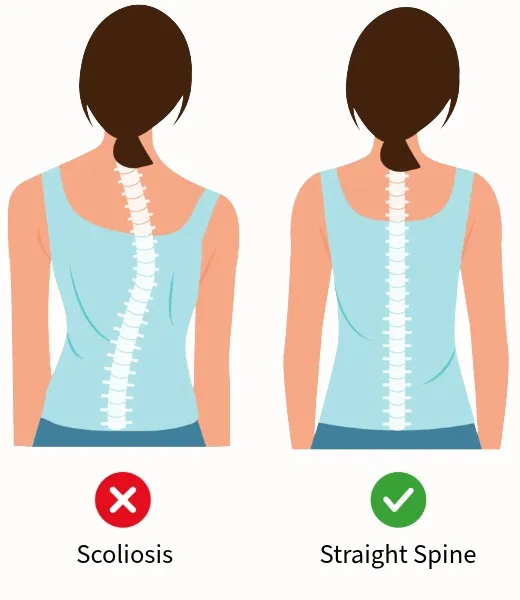
Scoliosis is an abnormal lateral (side-to-side) curvature of the spine, often combined with rotation of the vertebrae. When viewed from behind, a healthy spine should be perfectly straight. In scoliosis, the spine bends into a C-shape or S-shape.
The degree of curvature is measured using the Cobb angle — an angle drawn on a standing full-spine X-ray between the most tilted vertebrae at the top and bottom of the curve. The Cobb angle is the single most important number guiding scoliosis treatment decisions:
| Cobb Angle | Classification | Typical Management |
|---|---|---|
| Less than 20° | Mild scoliosis | Observation every 4–6 months during growth |
| 20° – 45° | Moderate scoliosis | Bracing to prevent progression during growth |
| Greater than 45° | Severe scoliosis | Surgical correction (spinal fusion) usually recommended |
| Greater than 70° | Very severe / rigid | Corrective surgery with possible anterior release or osteotomies |
Complete Classification of Scoliosis — Types, Causes & Age Groups
Dr. Ramachandran classifies every scoliosis patient along three axes — age of onset, spinal location, and underlying cause — because each axis influences treatment strategy.
A) Classification by Age of Onset
Early Onset Scoliosis (EOS)
Birth – 10 years
Highest risk of lung underdevelopment; growth-friendly implants preferred
Adolescent Idiopathic Scoliosis (AIS)
10 – 18 years
Most common type; rapid progression during growth spurt; bracing or surgery
Adult / Degenerative Scoliosis
Over 40 years
Pain-driven; caused by asymmetric disc and facet degeneration
B) Classification by Location
Thoracic scoliosis
Curve in the chest (thoracic) region; most common in AIS; produces rib hump
Lumbar / Thoracolumbar scoliosis
Curve in the lower back; common in degenerative scoliosis; causes waist asymmetry and back pain
Cervicothoracic scoliosis
Pain-driven; caused by asymmetric disc and facet degeneration
Double major curves
Two primary curves (e.g., right thoracic + left lumbar); requires careful surgical planning using Lenke classification
C) Classification by Cause
| Cause Type | What Causes It | Who It Affects |
|---|---|---|
| Idiopathic (80%) | Unknown cause — genetic predisposition suspected | Adolescent girls predominantly; can also affect younger children |
| Congenital | Vertebral formation or segmentation failure in the womb (hemivertebra, unsegmented bar) | Infants and children; present at birth |
| Neuromuscular | Muscle weakness from cerebral palsy, Duchenne muscular dystrophy, spinal muscular atrophy, polio | Children and young adults with underlying neurological conditions |
| Degenerative | Asymmetric disc and facet joint wear causing the lumbar spine to tilt | Adults over 50–60, predominantly women |
| Syndromic | Associated with Marfan syndrome, Ehlers-Danlos, Rett syndrome, neurofibromatosis | Children and adolescents with underlying syndromes |
Signs & Symptoms of Scoliosis — What to Watch For
Scoliosis is often painless in adolescents and detected incidentally. However, parents and patients should watch for the following:
In Children & Adolescents:
- Uneven shoulders — one shoulder visibly higher than the other
- Prominent shoulder blade (scapular winging) on one side
- Rib hump — a raised area on one side of the back when bending forward (positive Adam's test)
- Uneven waist — one side appears higher or the waistline is asymmetrical
- One hip higher or more prominent than the other
- Clothes hanging unevenly (one trouser leg appearing longer)
- Visible lean to one side when standing

Adolescent Idiopathic Scoliosis (AIS)
- Chronic, aching low back pain — often worse after prolonged standing or walking
- Radiculopathy — shooting leg pain (sciatica) from compressed nerve roots
- Neurogenic claudication — leg cramps and weakness that improve with sitting or bending forward
- Progressive stooping or lateral lean
- Difficulty walking long distances
In Severe / Advanced Scoliosis (Any Age):
- Shortness of breath — thoracic curve compressing lungs reducing vital capacity
- Reduced exercise tolerance — cardiopulmonary compromise
- Abdominal discomfort — compression of abdominal organs
How Is Scoliosis Diagnosed at SpineDRx, Bangalore?
Adam's Forward Bending Test — The First Screen
The simplest and most reliable screening test for scoliosis. The patient bends forward at the waist with knees straight and arms hanging. A rib hump or lumbar prominence visible from behind indicates vertebral rotation — the hallmark of true structural scoliosis. A result with a Cobb angle above 20 degrees warrants X-ray evaluation.
Standing Full-Length Spine X-Ray (PA Scoliogram)
The gold-standard diagnostic investigation. A standing PA (posteroanterior) full-spine X-ray from skull to pelvis allows: Cobb angle measurement, identification of all curves (primary and compensatory), assessment of spinal balance, skeletal maturity (Risser staging), and pelvic obliquity. This X-ray is essential at every follow-up visit to track curve progression.
MRI of the Entire Spine
MRI is mandatory before surgery and in atypical presentations. It identifies: spinal cord anomalies associated with congenital scoliosis (diastematomyelia, tethered cord, syrinx, Arnold-Chiari malformation), intraspinal tumours, nerve root compression in degenerative scoliosis, and disc prolapse contributing to pain.
CT Scan with 3D Reconstruction
CT scanning provides the detailed bony anatomy essential for surgical planning — pedicle size and orientation, vertebral rotation, and presence of congenital anomalies (hemivertebra, unsegmented bar). CT navigation data is used to guide robotic and computer-assisted pedicle screw placement at SpineDRx.
Pulmonary Function Tests (PFT)
For patients with thoracic curves greater than 60–70 degrees, PFTs quantify the degree of restrictive lung disease. Severely reduced vital capacity (below 40–50% predicted) is an independent surgical indication and guides anaesthetic planning.
Risser Sign & Skeletal Maturity Assessment
The Risser sign (degree of iliac apophysis ossification, graded 0–5) on the standing X-ray estimates remaining skeletal growth. This is critical in adolescents — a Risser 0 patient has the most growth remaining and the highest risk of rapid curve progression, demanding more aggressive management.
Why Choose Dr. Ramachandran G for Scoliosis Treatment in Bangalore?
Scoliosis — particularly complex adolescent, congenital, and neuromuscular cases — demands a surgeon with dedicated sub-speciality training, not just general spine surgery experience. Dr. Ramachandran stands apart:
| Differentiator | What It Means for You |
|---|---|
| Sub-speciality Scoliosis Training | Worldwide dedicated training specifically in scoliosis management — not a general spine surgeon who occasionally treats scoliosis |
| Meticulous Lenke-Based Planning | Every AIS surgery planned using Lenke classification to fuse the minimum levels necessary — maximising post-operative spinal flexibility |
| Robotic-Assisted Pedicle Screws | Robot-guided screw placement for millimetre accuracy — minimising nerve injury risk during complex deformity surgery |
| Intraoperative CT (O-arm) | Real-time 3D imaging during surgery to verify screw position before closure — no need for return to theatre for misplaced implants |
| IONM (Neuromonitoring) | Continuous SSEP & MEP monitoring throughout surgery — immediate alert if spinal cord function changes, allowing corrective action |
| Dual Ortho-Neuro Training | Expertise in both orthopaedic and neurosurgical skills — essential for managing spinal cord anomalies in congenital scoliosis |
| Growth-Friendly Options | MAGEC growing rods and other growth-friendly constructs for early onset scoliosis — avoiding premature fusion |
| Three Accessible Clinics | Kasavanahalli, Whitefield, Aster Whitefield Hospital — convenient across East Bangalore |
Scoliosis Surgery in Bangalore — What to Expect
Scoliosis is often painless in adolescents and detected incidentally. However, parents and patients should watch for the following:
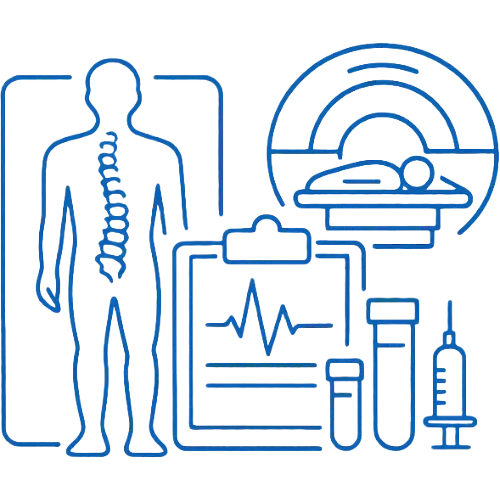
Pre-Operative Preparation
- Full-length standing X-rays, MRI, and CT for surgical planning
- Pulmonary function tests for thoracic curves > 60 degrees
- Blood work, cardiac evaluation, and anaesthesia fitness assessment
- Detailed counselling on goals, risks, expected correction, and recovery timeline
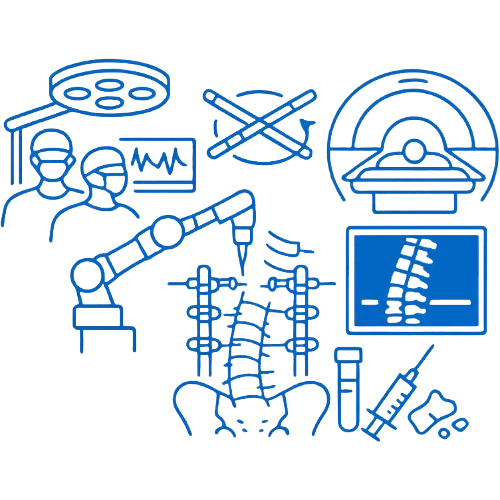
During Surgery
- General anaesthesia with continuous IONM (SSEP & MEP) — the surgical team receives immediate alerts if spinal cord activity changes
- Robotic-assisted or fluoroscopy-guided pedicle screw placement along instrumented levels
- Ponte or Smith-Petersen osteotomies at stiff levels to improve curve flexibility before correction
- Rod placement and derotation manoeuvre — the primary mechanism of scoliosis correction
- Intraoperative CT scan to verify all screw positions before closure
- Bone grafting over posterior elements to achieve solid spinal fusion
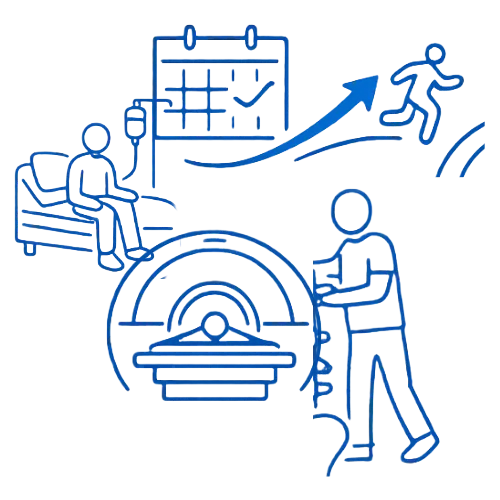
Recovery & Rehabilitation
- Sitting and walking commenced on Day 1–2 post-surgery
- Hospital stay: typically 5–7 days
- Return to school / light activity: 4–6 weeks
- Return to non-contact sports: 6 months
- Full fusion confirmed on X-ray: 12–18 months
- Physiotherapy programme for muscle strengthening and posture begins at 6–8 weeks
FAQs
Scoliosis is an abnormal sideways (lateral) curvature of the spine, often with vertebral rotation. It is measured using the Cobb angle on a standing front-view X-ray. Kyphosis, by contrast, is an excessive forward curve of the spine visible from the side. Both are spinal deformities, but they occur in different planes. Some patients can have both scoliosis and kyphosis simultaneously — a condition called kyphoscoliosis. Dr. Ramachandran at SpineDRx treats both deformities, individually and in combination. Surgery for scoliosis is generally recommended when the Cobb angle exceeds 45 degrees in adolescents with remaining growth, or 50 degrees in skeletally mature patients. The primary reason is that curves above 45 degrees continue to progress at approximately 1 degree per year even after growth ends, and larger curves are associated with cosmetic deformity, pain, and — when very severe — cardiopulmonary compromise. The decision is always individualised based on age, curve type, rate of progression, and symptoms. Bracing is the only evidence-based non-surgical treatment proven to halt scoliosis progression. The BRAIST study (the largest randomised trial on AIS bracing) showed that bracing with 18+ hours per day wear success in preventing surgical progression in 72% of patients, compared to 48% in the observation group. The Boston TLSO brace is the most widely used for thoracolumbar and lumbar curves; the Milwaukee brace is used for curves with a higher apex. Compliance — wearing the brace the prescribed number of hours — is the single most important factor determining success. Dr. Ramachandran provides brace prescriptions and follow-up at SpineDRx. Idiopathic scoliosis does have a genetic component — first-degree relatives of AIS patients have approximately a 10–12 times higher risk of developing scoliosis compared to the general population. However, the inheritance pattern is complex (multiple genes are involved), and having a parent with scoliosis does not mean a child will definitely develop it. All children of a parent with AIS should be screened with the Adam's forward bending test during their growth years. If any asymmetry is noted, an X-ray and specialist evaluation should follow promptly. Yes. Adults over 50 commonly develop degenerative scoliosis — caused by asymmetric wear of spinal discs and facet joints. Unlike adolescent scoliosis, degenerative scoliosis causes significant pain and neurological symptoms (leg pain, claudication, weakness). Most adult patients respond well to conservative management (physiotherapy, injections). When nerve compression or progressive instability is severe, surgical treatment ranging from minimally invasive decompression to full corrective fusion is available at SpineDRx. Age alone is not a contraindication to surgery — many patients in their 60s and 70s benefit substantially. The most important factor is the surgeon's specific expertise in scoliosis, not just the hospital. Dr. Ramachandran Govindasamy at SpineDRx has worldwide dedicated sub-speciality training in scoliosis correction and uses advanced technology including robotic pedicle screw placement, intraoperative CT (O-arm), and continuous neuromonitoring (IONM). He operates at Aster Whitefield Hospital, Bangalore — a JCI-accredited tertiary care centre — in addition to seeing patients at his clinics in Kasavanahalli and Whitefield. The Adam's forward bending test is the standard clinical screening test for scoliosis. The patient is asked to bend forward from the waist with knees straight and arms hanging loosely. The examiner views the back from behind. A visible rib hump on one side (caused by vertebral rotation pushing the ribs upward) or a lumbar prominence indicates structural scoliosis. A scoliometer can quantify the angle of trunk rotation (ATR). An ATR of 5 degrees or more, or a Cobb angle above 20 degrees on follow-up X-ray, warrants referral to a scoliosis specialist. The Lenke classification is the internationally accepted system for classifying adolescent idiopathic scoliosis curves into types 1–6 based on curve location, sagittal modifiers, and lumbar modifier. It is critically important because it determines which curves require surgical correction and which levels need to be fused. Proper Lenke classification ensures the minimum number of motion segments are fused while achieving a balanced, well-corrected spine — preserving maximum post-operative flexibility. Dr. Ramachandran bases every AIS surgical plan on meticulous Lenke classification, which he considers the single most crucial aspect of scoliosis surgery. The cost of scoliosis surgery in Bangalore depends on the number of levels fused, type of implants used (standard pedicle screws vs. robotic assistance), hospital facility charges, and length of stay. Most health insurance policies in India cover scoliosis surgery partially or fully when medically indicated. At SpineDRx, a detailed, transparent cost breakdown is provided at the pre-surgical consultation. Please contact our clinic for a personalised estimate based on your specific curve type and planned procedure. Adolescent idiopathic scoliosis (AIS) is typically painless — back pain in a teenager with scoliosis should prompt MRI to rule out an underlying cause (tumour, syrinx, tethered cord). Adult degenerative scoliosis, however, is a significant cause of chronic low back pain, leg pain, and neurological symptoms in older patients. Not all back pain is due to scoliosis — a thorough evaluation by Dr. Ramachandran will identify the true cause of your pain and determine whether the scoliosis is incidental or the actual pain generator.What is scoliosis and how is it different from kyphosis?
At what Cobb angle does scoliosis require surgery?
Is scoliosis bracing effective? Which brace is best?
Is scoliosis hereditary? Will my child get it if I have scoliosis?
Can adults develop scoliosis? Is adult scoliosis treatable?
Which is the best hospital for scoliosis surgery in Bangalore?
What is the Adam's forward bending test? How is it done?
What is the Lenke classification and why does it matter for scoliosis surgery?
How much does scoliosis surgery cost in Bangalore?
Can scoliosis cause back pain? Is all back pain from scoliosis?
What Happens If Scoliosis Is Left Untreated?
The consequences of untreated scoliosis depend on the curve magnitude and type:
Early scoliosis treatment in Bangalore at SpineDRx prevents all of these consequences — the earlier the evaluation, the simpler and more effective the treatment.
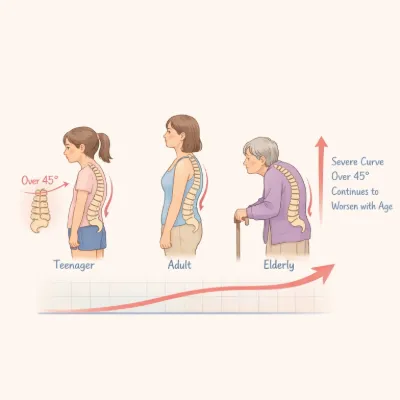
Progressive curve worsening
Curves above 45 degrees continue to increase throughout life
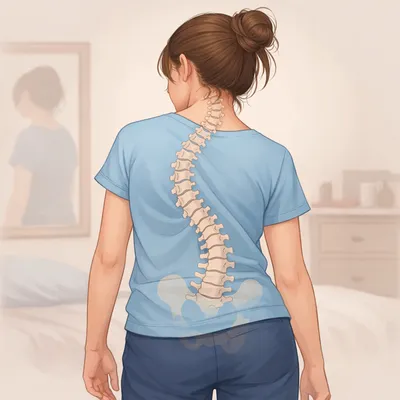
Severe cosmetic deformity
Prominent rib hump, shoulder imbalance, and trunk shift affecting confidence and daily life
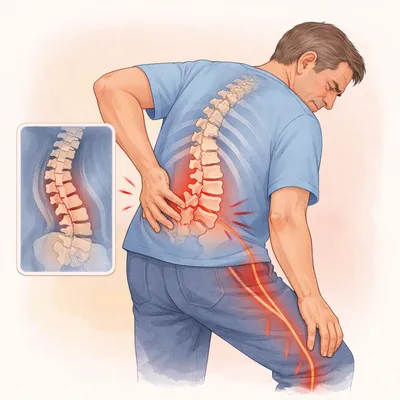
Chronic back and leg pain
Particularly in degenerative and large idiopathic curves
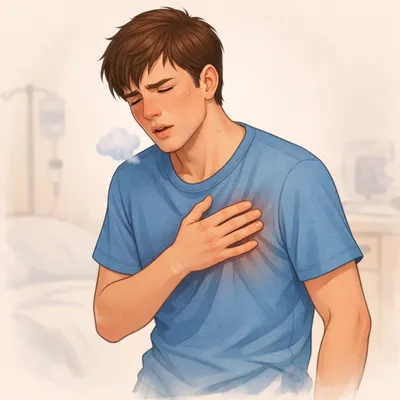
Cardiopulmonary compromise
Thoracic curves above 70–80 degrees restrict lung expansion, reducing exercise capacity and — in extreme cases — causing cor pulmonale (right heart failure from chronically low oxygen)
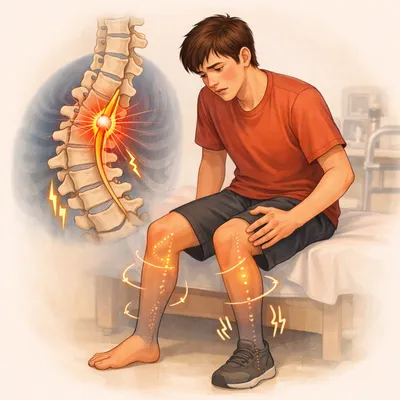
Spinal cord compression
Rare but possible in congenital and neuromuscular scoliosis; causes progressive leg weakness and paralysis
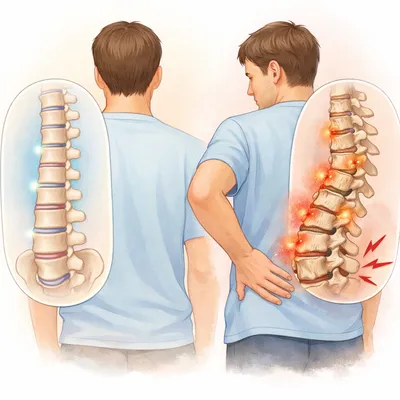
Premature spinal degeneration
Scoliotic spines develop arthritic changes decades earlier than straight spines
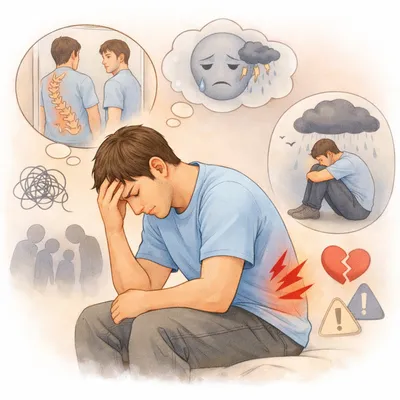
Psychological impact
Chronic pain and altered body image significantly increase rates of anxiety and depression in untreated patients